DTF Ink (Direct to Film Textile Ink) for all modified desktop DTF Printers
Specially researched and developed to outperform on DTF printers with Epson i3200 printheads. An exceptional tried and tested DTF ink formula which creates bright, clean colours and stretchability for small or large scale production of promotional items.
The new generation of water-based ink to print film transfer, these DTF inks are heralding a new way of operating. This is an exciting new way of fabric decoration which does not require pre-treatment. Instead, once heat cured the graphic is ready for either instant use or for storage for when you are ready to use it.
What are the advantages of DTF ink?
This new printing technology is gaining a lot of prominence for a wide variety of reasons including:
- Flexibility of the final graphic on the promotional item or garment
- Freedom it gives you to print on almost every possible fabric be it cotton, linen, silk, synthetic fabrics, eco-leather, etc.
- Its adaptability to work with both dark and light fabric
- No pre-treatment required
- DTF printers are easy to learn, use and operate
- Better print quality, even under high productivity situations
- After printing, the fabric has long-term wash resistance
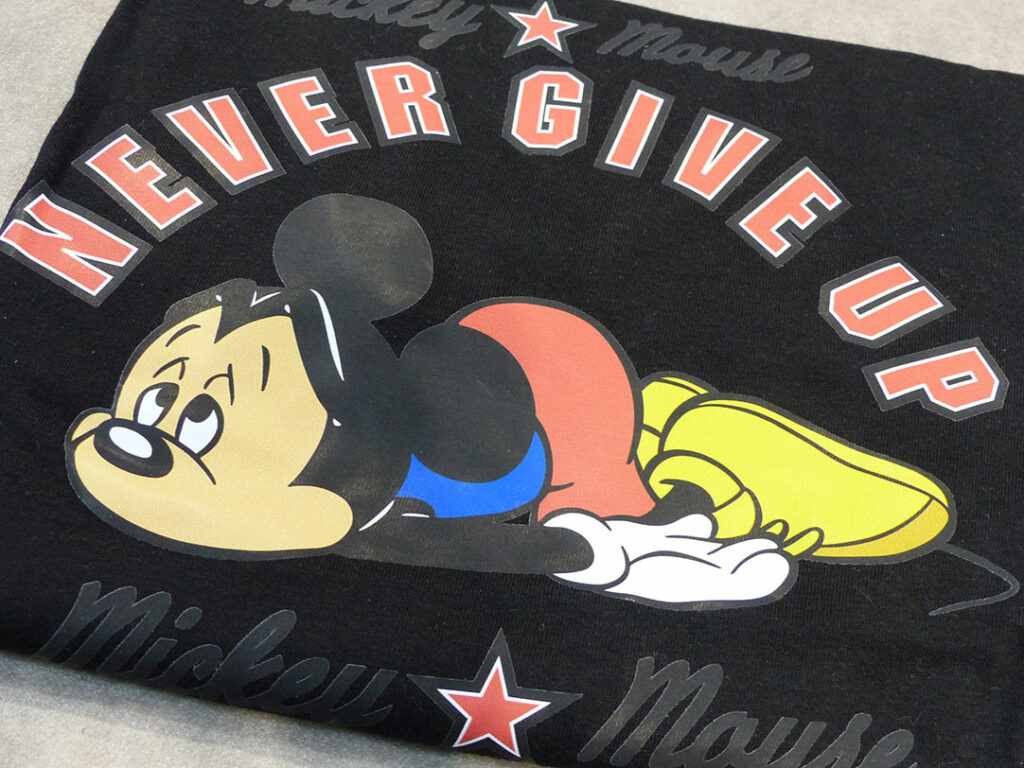
It is ideal for workwear, particularly when used in combination with the special media and powder. This is because it doesn’t crack like traditional screen printing garment options and it has a soft, pliable, flexible texture due to the water-based in used. It can therefore be used for an extensive variety of garments including gym clothing, overalls, high vis garments and cycling kit.
What is the DTF process?
- Design – Create your design using your preferred choice of design software (i.e. photoshop, illustrator, etc.
- RIP – If you are printing white on top of colour you will need to use a RIP.
- Print – Print your design onto your choice of coated PET film.
- Apply – Apply powder adhesive evenly onto printed film. If using manually, shake off excess or if using a powder shaker follow unit instructions.
- Bake – Melt the adhesive onto the film using a heat press, oven or heated shaker unit. Ensure even heat through-out at a temperature of 160C.
- Press – Heat press your design onto the substrate. Applicable on cotton, polyester, leather, cardboard and other flat, rough and rigid materials.
These DTF inks are a reliable and economic alternative, while also creating finished transfers which are stretchable and durable with an incredible feel and vibrant colours.